


Optimizing Liquidity & Capital Structure | vcfo
Assessing & Optimizing Your Liquidity & Capital Structure
The strength of your company’s liquidity and capital structure can be the difference between agility and vulnerability. That’s an especially important mindset in the midst of massive technological, infrastructure, and societal changes that are increasingly impacting business as we know it. For small- and mid-sized businesses, a well-structured capital stack and clear understanding of available liquidity are strategic levers that influence resilience, flexibility, and growth potential. Knowing exactly where your capital is coming from, how it’s deployed, and what financing options are available for your business enables you to act decisively rather than react hesitantly. In this post, we’ll explore how to assess and optimize your liquidity and capital stack so you can strengthen your financial foundation and seize opportunities and weather unexpected challenges with confidence.
Why Liquidity & Capital Stack Matter More Than Ever
In calm environments, it’s easy to let your company’s liquidity position and capital structure run on autopilot. But in today’s environment marked by tighter credit, relatively high interest rates, and unpredictability, “set it and forget it” habits can quickly become liabilities. The ability to access cash when needed and rely on a well-balanced mix of funding sources is a definitive strategic advantage. Businesses that truly understand and actively manage these areas are better equipped to respond decisively when unexpected challenges arise, disruptors arise, or opportunities surface that require quick action. In short, your liquidity and capital stack decisions will largely define how well your company can adapt, invest, and grow on your own terms. This period of economic turbulence has the potential to last longer and become more unstable than most people envision,
Common Pitfalls SMBs Face
Many SMBs pay close attention to liquidity and capital structure only when a problem demands it (e.g., cash shortage, operational financing need, or an unexpected opportunity). This reactive approach often means underlying issues go unnoticed until they become urgent, at which point the options for addressing them are limited and more expensive. Being proactive requires not just monitoring your financial position but also understanding the patterns and decisions that create vulnerabilities over time. Common pitfalls include:
- Overreliance on a single funding source, leaving the business exposed if that relationship changes or dries up.
- Liquidity blind spots, where assets appear strong on paper but are slow or costly to convert into usable cash.
- An unbalanced mix of debt and equity that doesn’t match the company’s growth plans, risk tolerance, or cash flow profile.
- Neglected debt maturities or loan covenants, which can trigger repayment pressures or restrict strategic moves at critical moments.
These challenges often develop gradually. Over time, a business might accumulate financing arrangements that once made sense but no longer align with its size, market conditions, or ambitions. Or it may hold assets (e.g., slow-moving inventory or long-dated receivables) that lock up capital needed elsewhere. Identify and address these risks before they cause disruption. Doing so protects flexibility, safeguards growth capacity, and positions the business to respond decisively in both calm and volatile conditions.
How to Assess Your Liquidity & Capital Stack
A thorough assessment starts with two big questions: How quickly could we access cash if we needed it? And how resilient is our mix of funding sources? Answering them involves more than reviewing a few ratios – you need to look closely at the timing and reliability of each cash inflow and obligation. One effective way to do this is by mapping a Liquidity Index that shows how quickly each asset could be converted to cash and when each liability comes due. While cash is available immediately, other categories like receivables, marketable securities, inventory, and prepaid expenses all vary in their liquidity based on operational realities. On the liability side, the details matter – payment schedules, interest rates, and lender requirements can all affect your ability to maneuver.
Balance Sheet Liquidity (asset-heavy example)
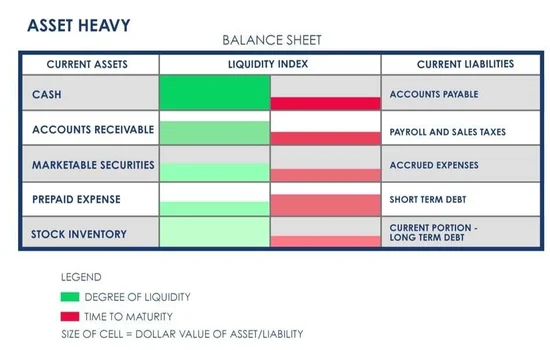
Assessing the capital stack requires a similar level of detail. Break down your sources of capital – lines of credit, loans, preferred equity, common equity, or other instruments – and evaluate the true cost, flexibility, and potential risks of each. This combination of liquidity and capital stack analysis provides a clear, fact-based starting point for improvement.
Strategies to Optimize
With a clear understanding of your current position, you can take deliberate steps to strengthen both liquidity and capital structure. Increasing liquidity buffers is often a priority. This can involve accelerating collections, optimizing inventory turnover, or establishing standby credit facilities that can be tapped when needed. Diversifying funding sources is equally valuable, reducing exposure to disruptions from any single lender or investor and giving you more options to match financing terms to specific business needs.
Restructuring or refinancing existing debt may yield better interest rates, extended maturities, or less restrictive covenants, all of which can improve cash flow and flexibility. Similarly, evaluating equity opportunities can open doors to new capital, expertise, and networks, though it’s important to weigh these benefits against any dilution of control. Matching financing terms to the lifespan of the assets they support (e.g., short-term funding for working capital needs, long-term financing for capital investments) helps maintain balance sheet health and avoids unnecessary refinancing risk.
Positioning Your Business for Strength and Agility
Liquidity and capital structure are too important to leave on autopilot. The companies that thrive are those that continually evaluate their financial position and make intentional adjustments to support both stability and growth. Don’t treat liquidity and capital structure as static line items, but as dynamic tools that can shape the future of your business. By managing these levers proactively, you position your organization to weather challenges, seize opportunities, and move toward your long-term goals with confidence.
—
Ready to strengthen your financial foundation and position your business for stability and growth – no matter what the market brings? Invite us for a conversation to learn how vcfo can help. We’ve partnered with leaders from over 6,000 businesses in our 29-year history and are ready to put our experience to work for you.